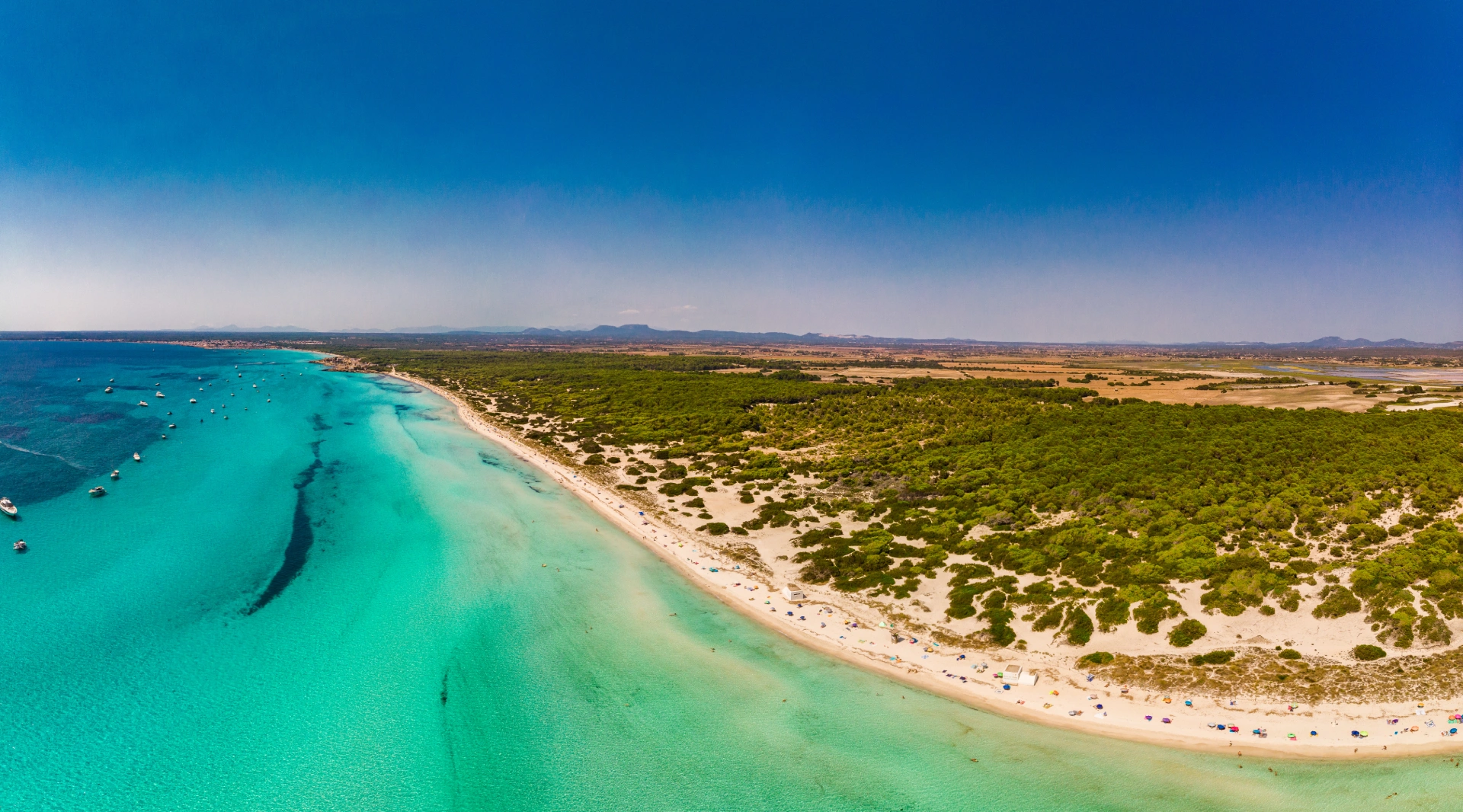
Turquoise water and white sand at Es Trenc beach, southern Mallorca

Balearic Islands · Spain

Mallorca

An island of dreams. Three ways to live it.

Discover the island
Destinations/Hotels
Destinations/Hotels
Dates
2 Adults + 0 Children
Room 1

Where to stay

Our hotels in Mallorca

Three very different houses on one island: a 16th-century boutique in Palma’s old town, suites overlooking a cove on the south-west coast, and apartments with a view in Palmanova. Choose the Mallorca you want.

  • 5 stars

    Palma de Mallorca

    Hotel Gloria de Sant Jaume

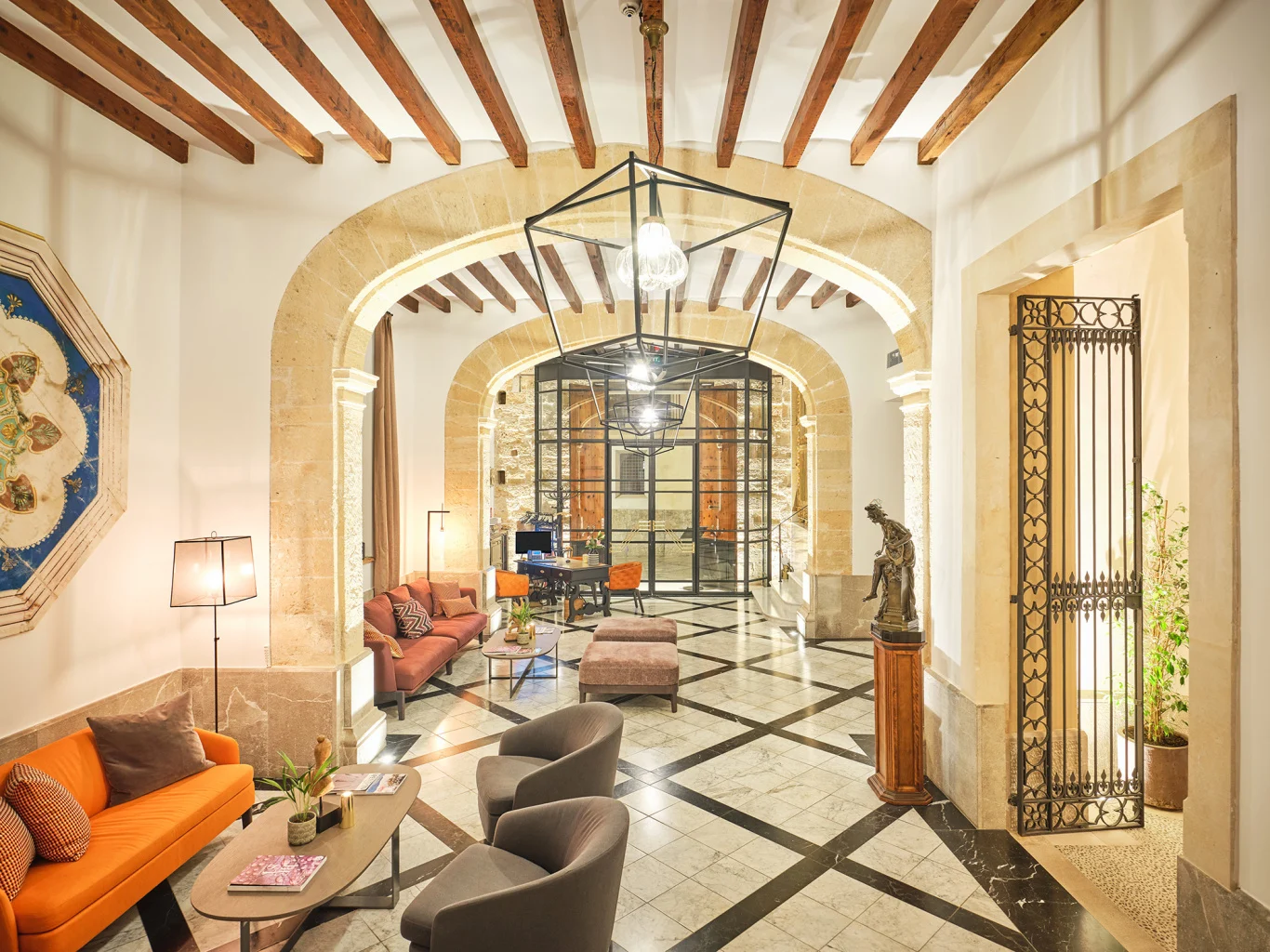
    A 16th-century manor house in the old town

    Fourteen rooms and no two alike: each one’s palette was decided by the original hydraulic floor tiles beneath it. Downstairs, a heated 14-metre pool runs into the vaulted cistern of the house.

    Accommodation
    14 individual rooms
    Best for
    Couples and city breaks
    • Pool inside the 16th-c. cistern
    • Rooftop with jacuzzi
    • El Patio de Glòria restaurant
  • 4 stars

    Camp de Mar

    Bahía Suites Camp de Mar

    Front-line suites above a south-west cove

    Sixty-four suites with a kitchen and full-height windows onto the Mediterranean, on a stretch of coast that still has an undeveloped sea view. The yoga room is built on the cliff edge and the massage cabin sits over the water.

    Accommodation
    64 suites with a kitchen
    Best for
    Couples and longer stays
    • Yoga room on the cliff
    • Flor de Sal restaurant
    • Spa and massage over the sea
  • 4 stars

    Palmanova

    Aquasol Aparthotel

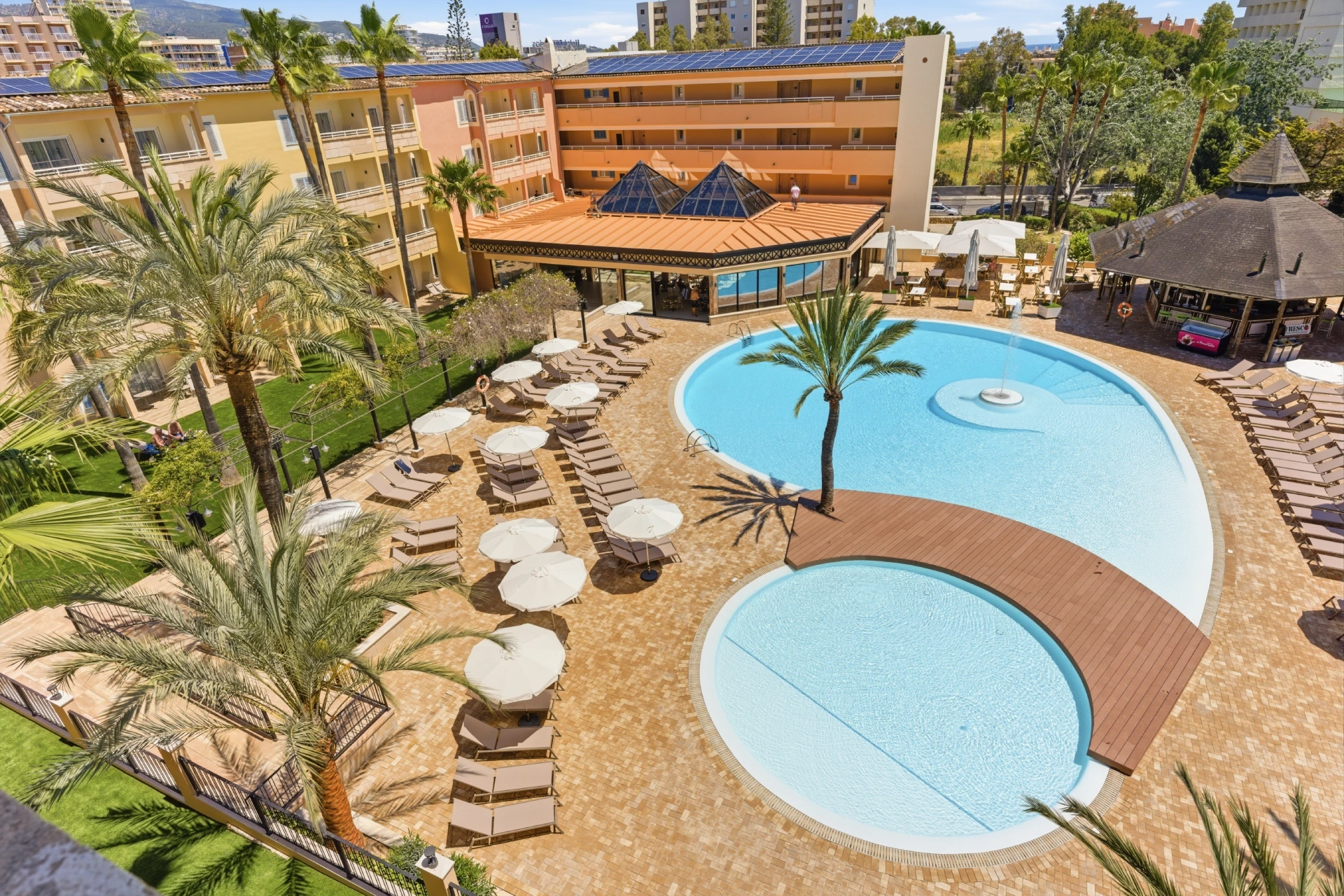
    One- to three-bedroom apartments set in gardens

    There are no studios here: the smallest is a one-bedroom apartment for four and the largest sleeps eight. Your own kitchen and, at the same time, a restaurant, a pool bar and a pub. Twenty minutes from the airport.

    Accommodation
    132 apartments
    Best for
    Families and groups of up to 8
    • Citrus Restaurant and Fresco Bar
    • Two pools and gardens
    • Mini-club for ages 4 to 12
Check availability and rates

Direct booking · Best rate guaranteed

The destination

A paradise at the heart of the Mediterranean

Mallorca is the largest of the Balearic Islands and, most likely, the hardest to sum up. Within an hour’s drive you go from the golden stone of Palma to the cliffs of the Serra de Tramuntana, and on to coves of clear water you can only reach on foot.

It is an island that rewards a slower pace: village markets, olive terraces, a headland to watch the sun go down from. History and nature intertwined, and a local life that keeps its own rhythm whatever the season.
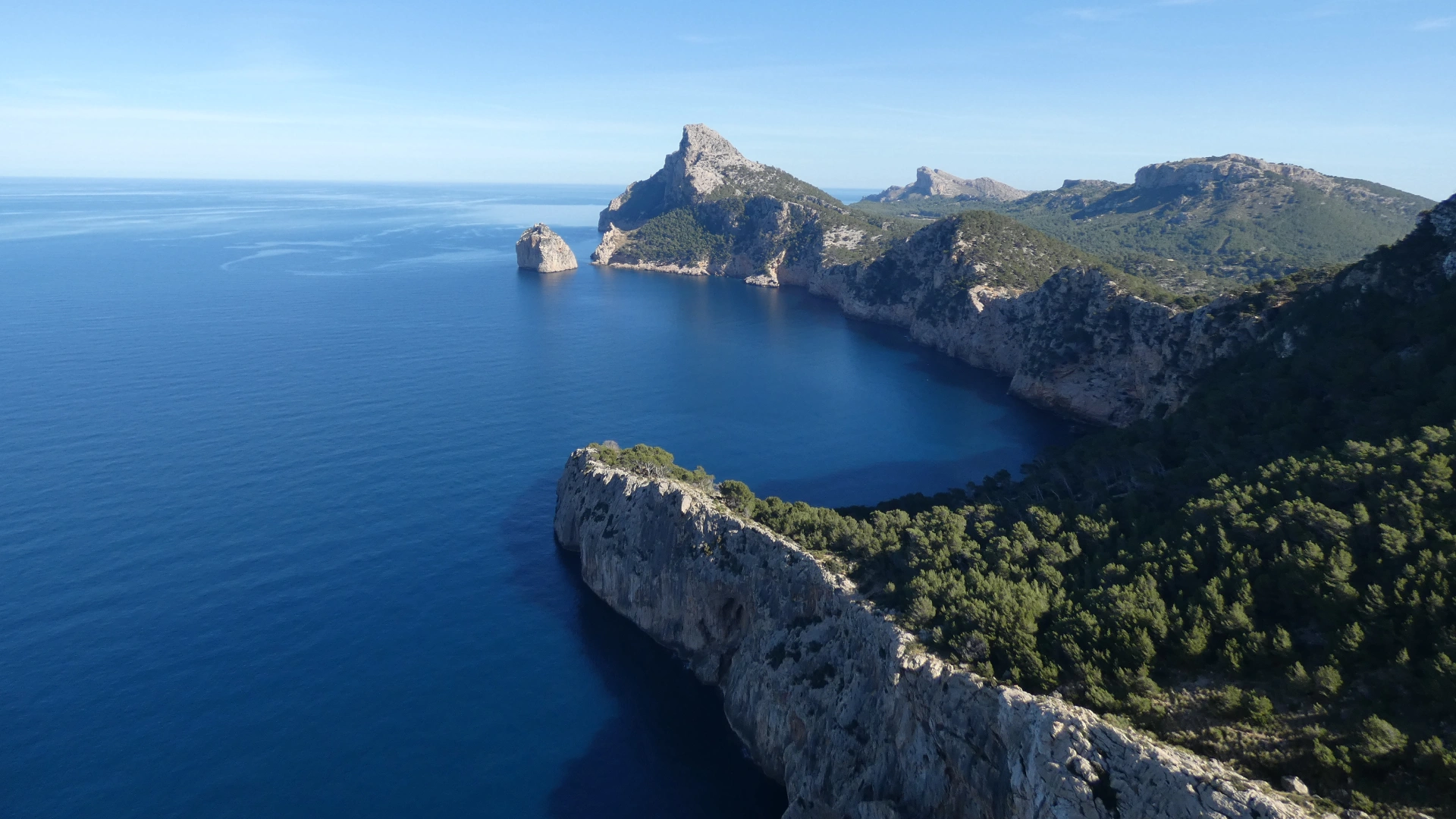
View of the Formentor peninsula in northern Mallorca at dusk
3,640
km² of island
262
beaches and coves
90
km of Serra de Tramuntana
300
days of sun a year
Turquoise cove near Alcúdia in northern Mallorca

01 · Coast

Beaches and coves to dream of

From the open sands of the south to the hidden coves of the north, every stretch of coast has its own character. Es Trenc and its Caribbean water, Cala Mondragó sheltered by pine woods, Cala Varques reachable only on foot.
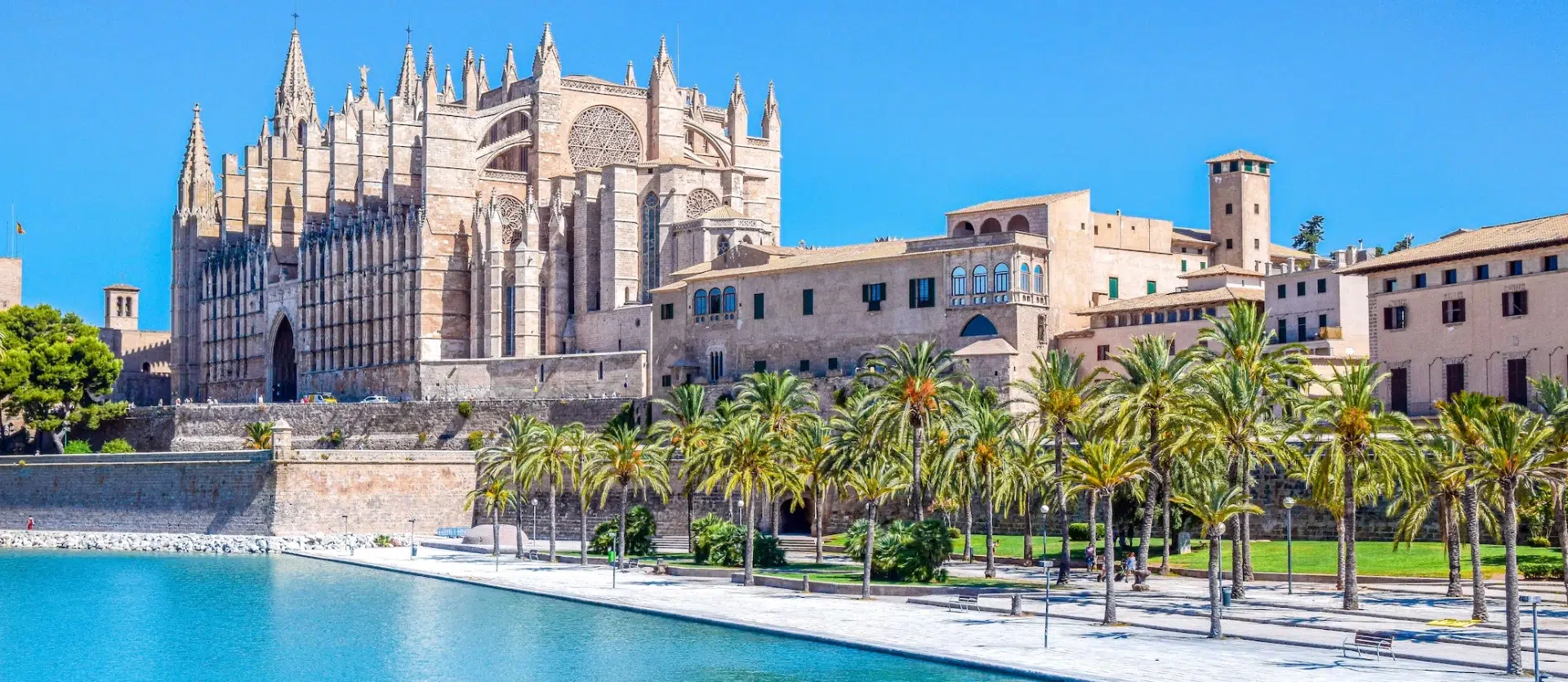
Santa María cathedral of Palma, La Seu, reflected in the pool

02 · Culture

Cultural richness without equal

La Seu — the cathedral of Santa María — has commanded the bay of Palma since the 13th century, with Gaudí’s intervention inside. Around it: museums, noble courtyards, and a cuisine that starts with sobrasada and ensaimada and does not stop there.
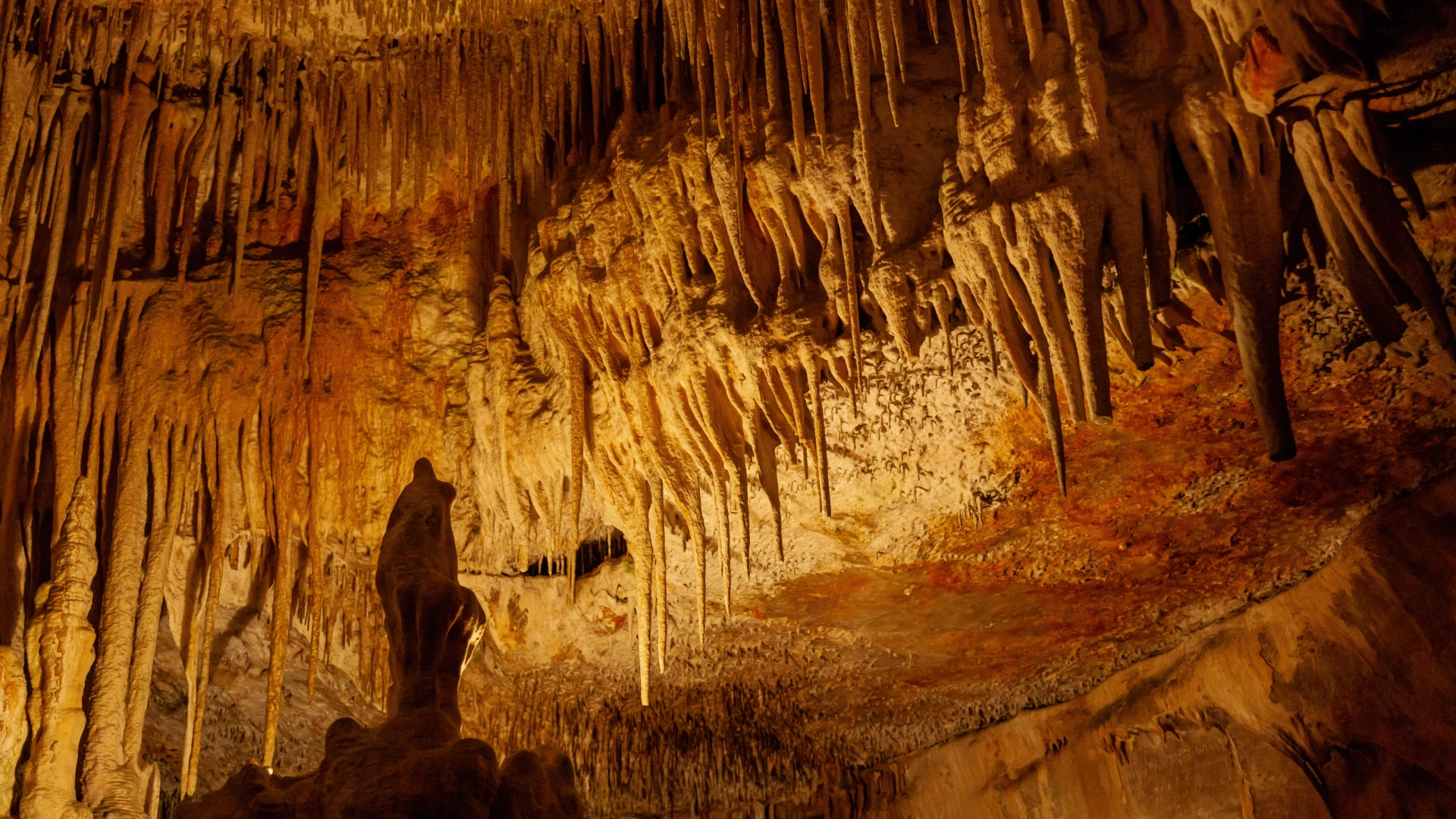
Stalactite formations reflected in the lake of the Caves of Drach

03 · Nature

Sights that take your breath away

The Serra de Tramuntana is a UNESCO World Heritage Site and a paradise for hiking and cycling. Underground, the Caves of Drach hold one of the largest subterranean lakes in Europe.

What to see

The island, zone by zone

You cannot cover Mallorca in a day, but almost everything is within an hour and a half. These are the five zones the island divides into, starting with the one closest to our hotels.

Palma and its bay Everything here is walkable from the old town. 4 places
  • Monument

    Cathedral of Mallorca (La Seu)

    Levantine Gothic begun in 1229, with one of the largest rose windows in Europe. It holds two layers of contemporary art on top of each other: Gaudí’s remodelling between 1904 and 1914, and Miquel Barceló’s ceramic chapel from 2007.

  • Monument

    Castell de Bellver

    The only circular castle in Spain, built between 1300 and 1311. From the terrace you can see the bay, the port, the Serra and the central plain all at once.

    Before you go Steep climb and very little parking at the top.

  • Monument

    Banys Àrabs

    One of the few standing remains of Andalusi Madina Mayurqa, from the 10th or 11th century: a chamber with twelve mismatched columns — reused from earlier buildings — under a dome pierced by skylights.

  • Monument

    Sa Llotja

    The merchants’ exchange Guillem Sagrera raised between 1426 and 1447, with helical columns and no capitals. The masterpiece of Mediterranean civil Gothic.

    Before you go Only open when there is a temporary exhibition.

South-west Calvià and Andratx: what you have on your doorstep from Palmanova and Camp de Mar. 4 places
  • Harbour

    Port d’Andratx

    A fishing port turned into one of the most exclusive marinas in the Mediterranean. On the north side of the basin the fish market and the old boats are still there.

    Before you go Parking is difficult in summer.

  • Island

    Sa Dragonera

    An uninhabited islet off Sant Elm, a natural park since 1995, with three lighthouses and a notable population of Balearic lizard.

    Before you go Boat only, from Sant Elm or Port d’Andratx. No bars and no shade: take water.

  • Cove

    Portals Vells

    A cove closed in by pines at the end of a forest track. At one end there is a hand-cut quarry cave with an altar carved into the rock: stone from here went into Palma’s cathedral.

    Before you go The last few kilometres are unpaved — not for a low car.

  • Cove

    Cala Fornells

    An inlet of barely eighty metres right on the boundary between Calvià and Andratx, with white sand and terraced houses stepping up the rock.

    Before you go Small, and it fills up early.

Serra de Tramuntana A UNESCO World Heritage Site since 2011, in the cultural landscape category. 4 places
  • Village

    Valldemossa

    Chopin and George Sand spent the winter of 1838–39 in cell number 4 of the Reial Cartoixa. He worked on the Preludes there; she later wrote “A Winter in Majorca”.

    Before you go About 30 minutes from Palma. Paid parking, and very busy around midday.

  • Village

    Deià

    Stone houses perched below the Teix. An artists’ refuge since the 1920s: Robert Graves lived here and is buried in the cemetery beside the church.

    Before you go About 40 minutes from Palma. Almost no parking, and access down to Cala Deià is heavily restricted in summer.

  • Village

    Sóller and its wooden train

    A valley of orange groves closed off by the Puig Major, with Modernista architecture on the square. The wooden train linking it to Palma has run since 1912 and takes about an hour; in Sóller it connects with a 1913 tram down to the port.

    Before you go Leaves from Plaça d’Espanya in Palma. Check timetables before you go.

  • Mountains

    Sa Calobra and the Torrent de Pareis

    Twelve kilometres of road laid out by Antoni Parietti in the 1930s, including the famous “nus de sa corbata”, where the asphalt crosses over itself in almost a full circle. At the bottom, pedestrian tunnels lead to the mouth of the Torrent de Pareis, a three-kilometre canyon with walls up to two hundred metres high, a Natural Monument since 2003.

    Before you go A demanding road, heavily used by coaches and cyclists. The alternative is the boat from Port de Sóller.

North Alcúdia and Pollença, the corner with the most Roman history on the island. 4 places
  • Monument

    Alcúdia and Pollentia

    The only complete walled enclosure in Mallorca, from the 14th century. Just outside it lies the Roman city of Pollentia, founded around 123 BC, with its forum and one of the best-preserved theatres in Spain.

    Before you go The archaeological site has its own opening hours and ticket, separate from the old town.

  • Viewpoint

    Cap de Formentor

    The northernmost point of the island, with cliffs over two hundred metres high and the Mirador des Colomer looking out onto an islet.

    Before you go In summer the final stretch is closed to private cars during the day, with camera enforcement. Check the season’s dates, or go by TIB bus, by bike or on foot.

  • Natural park

    S’Albufera

    The most important wetland in the Balearics: a maze of channels and lagoons that is an essential stop for migrating birds, with hides along the trails.

    Before you go You go in on foot or by bike from the car park; cars stay outside.

  • Viewpoint

    El Calvari, Pollença

    A stone stairway between cypresses climbing from the old town to an oratory, with the village and the bay below. Local tradition puts it at 365 steps, one for each day of the year.

    Before you go In summer, go first thing.

East and south Manacor, Santanyí and Campos: the coves, and the one cave with a concert. 4 places
  • Cave

    Coves del Drach

    A kilometre and a half of galleries at constant temperature leading to Lake Martel, 117 metres long. Since 1935 a quartet has played there for about ten minutes from lit boats, with the audience seated on the shore; afterwards you cross the lake by boat or over the bridge.

    Before you go Buy online — tickets sell out from April to October.

  • Beach

    Es Trenc

    Two kilometres of white sand with not a single building behind it, inside a natural park protected by law since 2017. Next to it, the salt pans and the Salobrar de Campos, where flamingos overwinter.

    Before you go Paid, unpaved car parks only, and they fill up early. Almost no shade.

  • Cove

    Parc Natural de Mondragó

    Two sandy coves, s’Amarador and Cala Mondragó, linked by a coastal path, with the pine woods and wetlands behind them protected.

    Before you go Paid parking that fills up by mid-morning.

  • Cove

    Caló des Moro

    A tiny cove wedged between cliffs, reached down rock-cut steps. It has become the symbol of the island’s overtourism: on peak days thousands of people have been counted.

    Before you go The access streets are restricted to residents, so you park far off and walk. The steps are uneven.

Frequently asked questions

What people usually ask us about Mallorca

Real questions from people planning a trip to the island, answered with concrete facts about our three hotels.

When is the best time to visit Mallorca?

May to June and September to October. The sea is already — or still — warm, the coves can be enjoyed without the crowds, and the temperatures are right for walking in the Serra de Tramuntana. July and August are the hottest and busiest months. If you are coming to cycle, the main season runs from February to April.

Which part of Mallorca should I stay in?

It depends what you are here for. Palma if you want a city, an old town, museums and restaurants on foot. The south-west — Camp de Mar, Palmanova — if you want beaches and coves with Palma less than half an hour away by car. The north and east are further from everything, but they are the most unspoilt stretches of coast.

Which of the three Cabau hotels in Mallorca suits me?

Hotel Gloria de Sant Jaume (5★, Palma) is a 14-room boutique in a 16th-century manor house, made for couples and city breaks. Bahía Suites Camp de Mar (4★) is 64 front-line suites with a kitchen, for anyone after the coast and some quiet. Aquasol Aparthotel (4★, Palmanova) has 132 one- to three-bedroom apartments sleeping 4 to 8, with a kids’ club: the choice for families and groups.

How far is Palma airport from each hotel?

Palma airport (PMI) is roughly 20 minutes by car from the Aquasol Aparthotel in Palmanova, about 30 minutes from Bahía Suites in Camp de Mar, and about 15 minutes from Hotel Gloria de Sant Jaume in the centre of Palma.

Do I need a hire car in Mallorca?

For a city break in Palma, no: the old town is walkable and there is a bus from the airport. To really get to know the island — the eastern coves, the Serra de Tramuntana villages, Es Trenc — yes, it helps. Many of the best coves have no direct public transport.

Which are the best beaches and coves in Mallorca?

Es Trenc, in the south, is the best known for its white sand and protected dunes. Cala Mondragó is a pair of twin coves inside a natural park. Cala Varques can only be reached on foot, which is why it stays as it is. In the north, the Alcúdia and Formentor area has long beaches and clear water.

Is Mallorca a good destination with children?

Yes. Palmanova and Camp de Mar have calm, shallow beaches. Aquasol has a kids’ club for ages 4 to 12, two pools and apartments with up to three bedrooms, so a large family does not need to book two separate rooms. The Caves of Drach and the Serra de Tramuntana both work well as a day trip.

How many days do you need to see Mallorca?

Four or five nights is enough to take Palma at a proper pace and fit in two day trips: one to the Serra de Tramuntana and one to the eastern or southern coves. A week lets you add the north — Alcúdia, Formentor, s’Albufera — without rushing. For a weekend, stay around Palma and its bay rather than trying to cross the island.

Can you drive to Cap de Formentor in summer?

In the high season the final stretch of road, between Formentor beach and the lighthouse, is closed to private cars for much of the day, with camera enforcement and fines. The alternatives are the TIB bus network, a bike, going on foot, or travelling outside the restricted hours. The exact dates change each season, so check before you set off.

Is the Sóller train worth it?

Yes, if the journey itself is the point. It is a wooden train running since 1912, leaving from Plaça d’Espanya in Palma, taking about an hour and crossing the Serra through thirteen tunnels to the orange-grove valley of Sóller. There it connects with a 1913 tram down to the port. Driving is faster, but then the trip stops being the plan.

What should you eat in Mallorca?

Sobrasada and ensaimada are the famous ones, but the island’s cooking is broader: tumbet, frito mallorquín, arròs brut, coca de trampó and, in season, panades and robiols. To drink, the Binissalem and Pla i Llevant denominations have come a long way in recent years.

Can you go to the beach outside July and August?

Yes. The sea is usually warmer in September and October than in June, because it holds the heat built up over the summer. In May the water is still cool, but the coves are empty and you can combine the beach with hiking — something that is hard to do in the August heat.